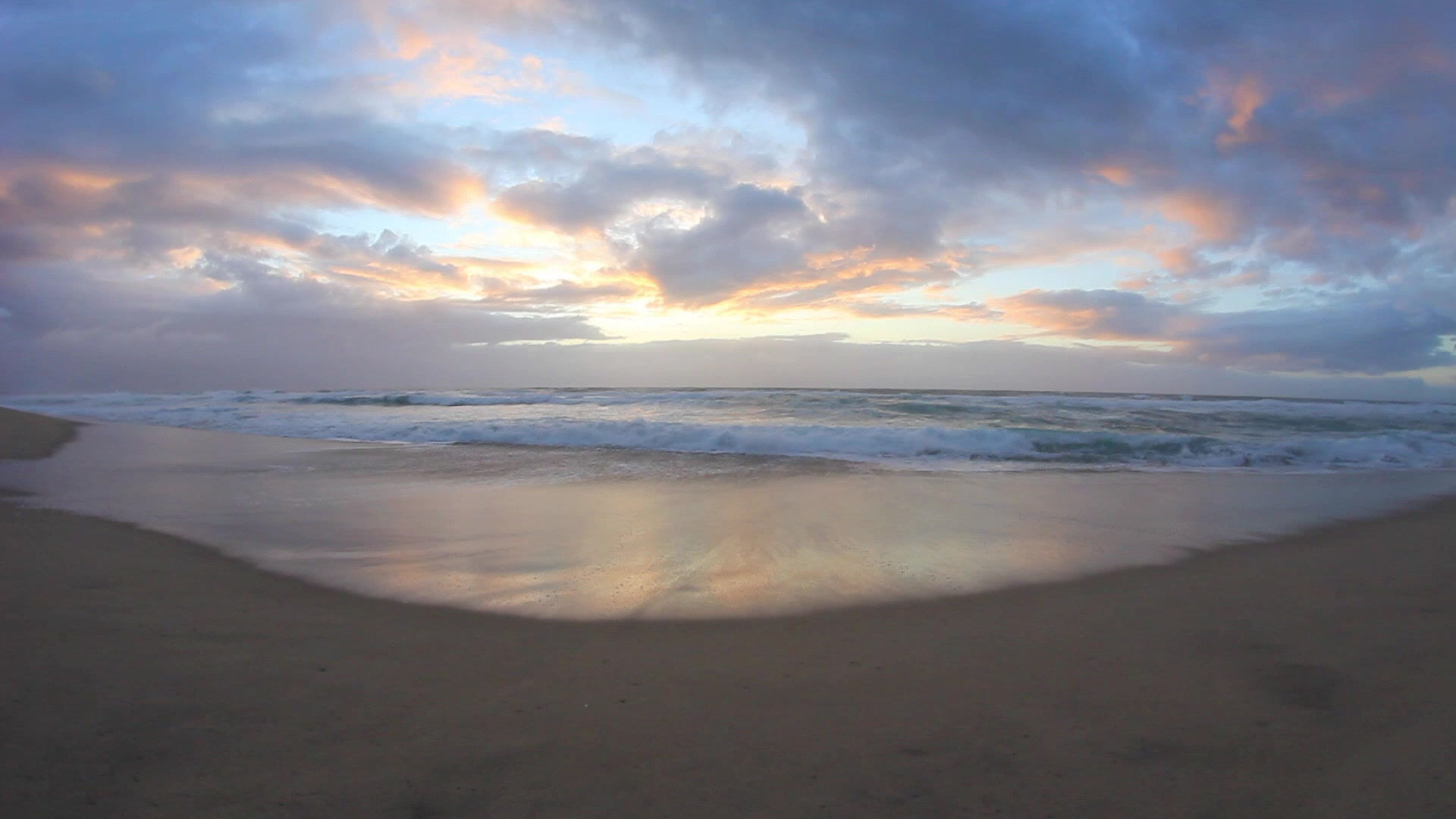


2002, Wings III – Ambient Bliss
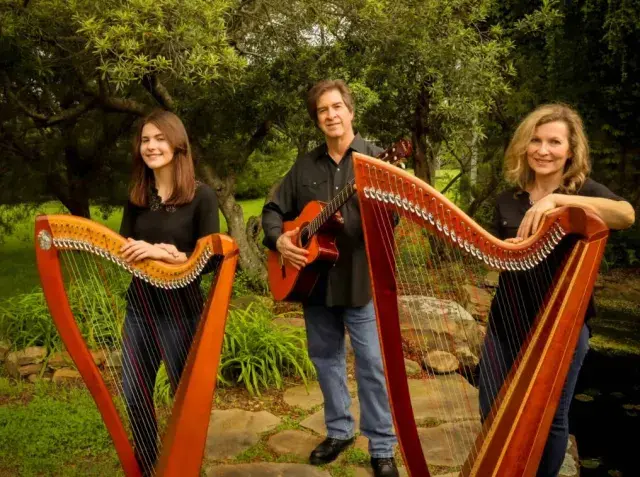
Thirty-four years after 2002 first invited listeners to spread their wings, Randy and Pamela Copus and their daughter Sarah return to the place where their extraordinary musical journey began—not to recreate the past, but to discover what those wings mean now. On Wings III – Ambient Bliss, the multi-talented trio transforms the familiar idea of flight into something far more inward and elemental: a state of weightlessness where piano notes drift through clouds of sound, distant frequencies shimmer like light, voices appear and disappear like passing memories, and silence becomes as important as the notes surrounding it.

The result is one of the most spacious and contemplative expressions yet of the musical world 2002 has been building for more than three decades. Rather than reaching for the elaborate instrumental interplay that has characterized so much of their catalog, the three deliberately strip the music down to its atmospheric essence, allowing each tone to breathe, resonate and fade before another takes its place. There are no metronomes or timing grids guiding the ten compositions. Everything seems to move according to its own natural gravity—or, in this case, its own lack of gravity.
“Curiosity,” the band says when asked what finally brought them back to the Wings concept. “Wings was our first album as 2002, in 1992. The goal was to create an ambient, but melodic album that maintained a consistent tone from beginning to end, and we’ve carried that theme forward with Wings II – Return to Freedom, and now Wings III – Ambient Bliss. What is amazing is to watch the evolution of this sound, with so much time between each album. It’s fascinating for us to revisit a theme like this, and see how all the intervening years, all the other albums and musical adventures, have changed and added to our sound. It’s like getting back to your roots, to see how far you’ve come.”
That simple observation is at the heart of Wings III. This is not 2002 looking backward. It is 2002 revisiting an old doorway with three decades of additional musical experience, technology, family history, spiritual reflection and creative exploration behind them. Across ten pieces, the trio largely abandons conventional song architecture in favor of atmosphere, space, resonance and the subtle movement of sound.
The original Wings was inspired by the story of Daedalus and Icarus, the Greek mythological figures whose attempt at flight ended when Icarus ventured too close to the sun. Over the years, the metaphor evolved. On Wings III, the Copuses envision flight as something more internal—a state of release in which the listener can rise without fear of falling. “Ambient Bliss is a place of peace and safety, where one is free to reach those heights—but without the danger of melting your wings!”
The difference is audible almost immediately. Where earlier 2002 recordings have often been defined by the distinctive personalities of flute, harp, guitar, cello, piano, Irish whistle, percussion and Sarah’s remarkable voice, Wings III deliberately blurs those identities into a larger sonic organism. The musicians still employ some of their signature instruments and voices, but none is intended to dominate. Instead, notes and atmospheres appear to move according to their own natural momentum. “From the beginning, we wanted the listener to be immersed in a free, expansive, blissful space,” they explain.
But this expansive aesthetic is not synonymous with stillness. One of the album’s most fascinating qualities is how much movement exists inside music that initially seems almost motionless. Sounds rise, gather intensity, dissolve and return in altered form. Frequencies move upward and downward. A piano phrase may linger after its surrounding atmosphere has vanished. A shimmering electronic tone can become the focal point for a few seconds before drifting back into the larger field.
“One misconception has been that ambient music is, by its nature, static or sterile,” the band says. “The best ambient music is full of motion and life, even if subtle. The way we bring the colors in and out is very much on purpose, an effort to connect with the coming and going of colors in our emotional lives. Feelings and emotions don’t usually start and stop like a switch—they come on, have their peak, and then fade away. We wanted to create a natural environment for our listeners to be able to dream into, where they don’t have to work at being immersed.”
That philosophy shapes “Free Spirit,” a beautifully sparse opening in which gentle piano notes seem to float through an immense electronic haze. High-frequency tones hover around the melody like shafts of light suspended in air, while celestial vocal colors become part of the atmosphere rather than a conventional lead. The effect is tender, meditative and almost timeless—the musical equivalent of simply existing without needing to arrive anywhere.
Its inspiration, however, was profoundly earthly. During the song’s creation, one of the Copuses’ backyard squirrels, a little creature who had become accustomed to approaching them for treats, died in their hands. “She was special, a free spirit, so happy to just be,” they recall. “Maybe that is the album’s true message.”
“Quiet Morning” follows with a subtle awakening. Bright synth washes gradually intensify like sunlight gathering behind curtains, then retreat before returning again. Elegant piano phrases punctuate each emergence, while higher tones sparkle against darker frequencies. The arrangement breathes almost like a living thing—inhale, exhale, illuminate, fade.
“City Rain” moves into a different tonal register. A piercing high tone enters the surrounding atmosphere before soft piano emerges, then gradually settles into a lower, more introspective landscape. The contrast with the preceding track is striking. Instead of morning light, there is the feeling of watching rainfall through a window while the world outside becomes distant and indistinct. The piano grows increasingly sparse as the ambient field darkens, leaving isolated tones hanging in the air.
The Copuses explain that they begin such pieces by reducing an emotion to its simplest essence before translating it into sound. Imagery can provide the doorway—perhaps a memory of rain falling against a city window—but ultimately, they say, “it’s pure intuition, and following the muse.”
With “Taking Flight,” that muse becomes unmistakably airborne. The piece begins almost imperceptibly, then gathers electronic percussion and increasingly capacious soundscape. Distant high strings, isolated plucked tones and chiming sounds seem to rise above the sonic horizon. Rather than a conventional crescendo, the sensation is one of elevation: individual sounds appear and disappear inside an increasingly intense atmospheric current.

The visual catalyst was a large bird opening its wings beneath the sun, preparing to leave the earth. For 2002, visual imagery and sound often seem to co-create one another. Sometimes the image comes first; sometimes the music generates it. Here, the bird remained at the center of the composition as the piece evolved, connecting directly to the larger Wings mythology.
“Shimmering Path” takes that sense of movement inward. Its tonal layers gradually intensify, retreat and return, creating the sensation of traveling along a route that cannot be seen but can somehow be felt. A high synthesizer tone glows within the larger wash, briefly becoming a beacon before disappearing again. The music seems less concerned with destination than with the experience of continuing forward.
That leads naturally into “The Clearing,” where the atmosphere begins to feel lighter and more open. Graceful piano tones mingle with high electronic frequencies, subtle bell-like sounds and faint horn-like colors. There is a gentle tension within the sonic details, but never enough to disturb the overall tranquility. Instead, the music suggests what happens after passing through something difficult: the realization that there is finally room to breathe.
Then comes “The In Between World,” perhaps the album’s most intriguing exploration of sonic duality. The atmosphere can become dark, murky and mysterious before suddenly opening into high, almost angelic frequencies. The music seems to hover between two different states of being. Extended chords—sevenths, ninths and elevenths—move upward while the overall motion moves downward, creating the sensation of being pulled in opposite directions. Yet because the piece remains in a major key, its darkness never becomes a never becomes threatening.
And there is another reassuring presence: Sarah. Her voice floats in and out of the composition, not as a conventional vocalist but almost as a guide moving through the shadows. It is one of the clearest examples of how her maturation within 2002 has altered the interpretive possibilities of the family’s music. “Watching Sarah grow up has been the most joyful and spiritually satisfying experience of our lives,” Pamela and Randy say. “She always inspires us to reach higher and to believe that we can.” Her contribution, they add, gives “a deeper purpose to everything we do.”
“Weightless” continues that suspension between movement and stillness. Light piano and synth tones seem to dance slowly over the sonic foundation, occasionally allowing a darker shade to emerge underneath. The piano remains sparse, almost crystalline, like isolated points of sunlight breaking through a cloud bank. A delicate naturalistic quality enters the soundscape without becoming literal, reinforcing the sensation of floating free of gravity.

If “Weightless” is about release, “Faraway Memory” is about what remains after time has done its work. A wind-like electronic current arrives with an almost ominous undertow, surrounding faintly angelic voices and higher tones. Earthy and celestial at once, the piece feels simultaneously grounded and otherworldly. The band describes memory itself as the driving force: as time passes, the details become increasingly indistinct until only fragments remain—“bits and pieces in black and white”—along with the feelings attached to them.
That is precisely what the music captures. Rather than recreating a specific moment, 2002 achieves the sensation of remembering. The album’s dedication to the late artist and longtime friend Cindy Grundsten adds another dimension to that idea. Grundsten created artwork for six of the band’s albums, and the Copuses had held onto another of her pieces, “A Peaceful Place to Be,” for years without knowing when they might use it. After her death in 2022, they eventually returned to the image when they began thinking about music that could cradle the listener in serenity.
Her daughter granted permission for them to use the artwork for Wings III, transforming the album into both a new creative chapter and an intimate remembrance of someone whose visual imagination had been part of 2002’s journey for so long—an especially fitting connection to an album concerned with reflection, release, inner peace and flight is now carrying the image of a friend forward with it.
It is equally fitting that the Copuses make a point of emphasizing that Wings III was created by “human hands and hearts—not A.I.” The statement is less a technological argument than an explanation of what they believe music-making should be. “What they are calling artificial intelligence could not have made the music on this album, because it is simply too personal,” they say. “The images and emotions were made into music, because they could not be expressed with words.” There is also something wonderfully old-fashioned in their reasoning: they make music because they enjoy making music. “For us, it is important for music creation to be fun.”

After more than three decades, that may be one of the secrets behind 2002’s longevity. They have never stopped experimenting, but they also have never seemed interested in experimentation for its own sake. Whether exploring Celtic traditions, nature, mythology, memory, new technology or ambient sound, they continue to follow whatever musical path feels alive.
Wings III – Ambient Bliss takes that philosophy to its most elemental place yet. There are no elaborate instrumental showcases demanding attention, no need for a listener to decode a complicated narrative. Instead, 2002 offers space to breathe, remember, drift, dream and simply be. “Wings of Light,” the album’s closing composition, leaves the door open rather than providing a definitive conclusion. “This third addition to the Wings series is not really about a final destination,” they explain. “The concept is to have endless journeys and destinations possible, and those are definitely very personal for each listener.”
After 34 years, perhaps that is the most beautiful evolution of the Wings metaphor. In 1992, wings represented the possibility of flight. In 2007, they became synonymous with freedom. Now, in 2026, they represent something quieter and perhaps more profound: the freedom to let go of where we think we are supposed to be going.
The music does not tell us where to land. It simply gives us wings—and leaves the sky to us.
Comments