


KEEPING THE MUSIC ALIVE: INSIDE BIG PHAT POD AND THE ONGOING LEGACY OF GORDON GOODWIN
Behind a massive soundproof door in an otherwise unremarkable industrial park in Burbank, a remarkable effort is underway to preserve and expand the legacy of one of contemporary music’s most celebrated creative forces. Inside The Dreaming Tree - a production facility known for creating feature films, documentaries and commercials, film, TV and video games - session singer, vocal contractor, educator and longtime Big Phat Band singer Vangie Gunn-Goodwin and her co-host, award-winning composer, arranger and producer Andrew Kesler, have transformed a podcast studio into a vibrant living archive celebrating Gordon Goodwin’s music, career and enduring legacy. It’s also become a vibrant gathering place for an extended musical family.

Framed by a giant Big Phat Pod logo and surrounded by shelves displaying Big Phat Band albums, memorabilia and several of the four Grammy Awards Goodwin earned from 25 nominations during an extraordinary career, the pair are creating a series devoted not only to the acclaimed composer, arranger and bandleader’s music, but also to the stories, friendships, creative partnerships and personal experiences that shaped it over decades. Critical to bringing that vision to life is Kesler, whose friendship with Gordon stretches back years. An accomplished composer, arranger and producer who first connected with Goodwin through recording projects and holiday collaborations, Kesler combines deep musical knowledge with an obvious affection for Gordon’s work. His quick wit and self-described status as a “Gordon nerd” make him the ideal counterpart to Vangie’s warmth and enthusiasm, creating the easy chemistry that drives the series.
While the podcast emerged following Goodwin’s passing in December 2025, the idea itself originated with Gordon. About six months before his death, podcast producers approached Gordon and Vangie about creating a series devoted to his music, career and creative process. The concept immediately appealed to him because it felt like a natural extension of Phat Tracks with Gordon Goodwin, the nationally syndicated radio show (out of KKGO Los Angeles and later KSDS San Diego) he hosted from 2017 until illness forced him to step away. Listeners discovered that beyond his brilliance as a composer and arranger, Gordon possessed a rare gift for storytelling. Whether discussing Count Basie, Miles Davis, Earth, Wind & Fire, Barbra Streisand or Jacob Collier, he consistently elevated the listening experience by explaining where the music came from, why it mattered and who helped bring it to life. “He would tell you why a song was important, who played on it and what made it special,” Vangie recalls. “Then when you heard the song afterward, you appreciated it on a completely different level.”
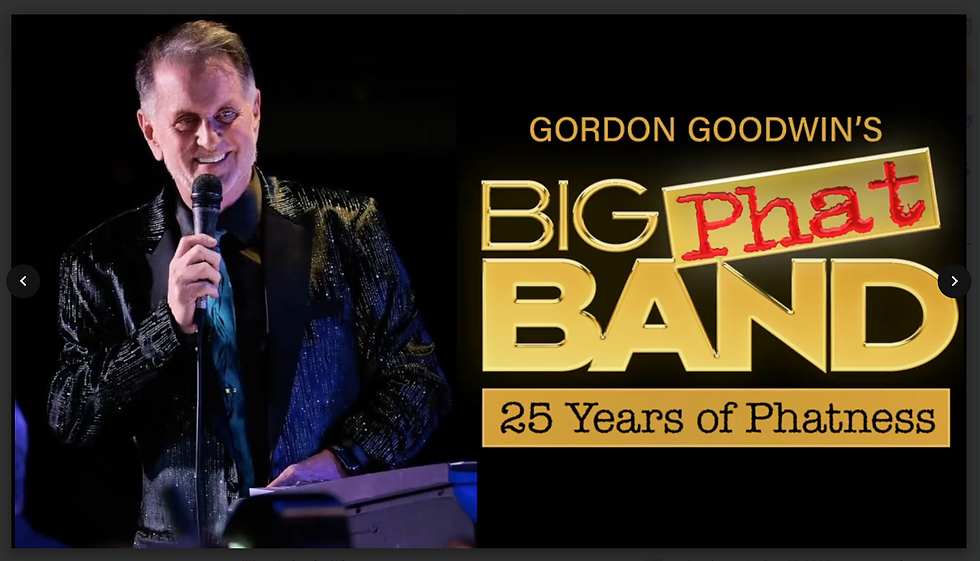
Before the podcast could begin, however, life intervened. Gordon and Vangie were balancing tours, performances and the recording of what would become his final studio album with the Big Phat Band, 25 Years of Phatness. Featuring fresh originals alongside reimagined versions of fan favorites including “Hunting Wabbits,” “The Jazz Police” and “Sing, Sang, Sung,” the project captured the ensemble at full creative strength. Shortly afterward, Gordon was diagnosed with pancreatic cancer.
Looking back now, Vangie views the completion of that album as something close to miraculous. “We got it done just in time,” she says. “When I listen to that album now, I hear Gordon’s joy. I hear his optimism. I hear everything that made him who he was.” After treatment, a brief return to daily piano playing and encouraging signs of improvement, Gordon suffered a massive hemorrhagic stroke shortly after Thanksgiving 2025 and passed away on December 8.

For a time, the podcast naturally faded into the background as Vangie navigated grief and the overwhelming responsibilities that follow the loss of a spouse. Then one afternoon, while driving home from Disneyland, where she teaches vocal workshops several times a week, she found herself thinking about the upcoming release of 25 Years of Phatness and wondering how best to continue sharing Gordon’s music with audiences around the world. The answer arrived suddenly.
The podcast idea returned with remarkable clarity. Entire seasons began forming in her imagination, with each one devoted to a specific album, era or chapter in Gordon’s career. Individual episodes could focus on particular songs, recording sessions, musicians, engineers and collaborators. “The stories were already there,” she says. “The music was there. The relationships were there. It just needed somebody passionate enough to bring it to life.”
Observing a recording session reveals that Big Phat Pod is far more than a conventional interview program. On the evening I attended, saxophonists Brian Scanlon, Danny Kaneyuki and Alex Hahn, front-of-house engineer Ryan Mowrey and acclaimed percussionist Brian Kilgore rotated through the guest chairs as Vangie and Kesler guided conversations that felt equal parts oral history, educational seminar and reunion among old friends. Excerpts from 25 Years of Phatness and classic Big Phat Band recordings filled the room as solos were isolated, analyzed and celebrated. The format allows listeners to move beyond simply hearing the music to understanding how it was conceived, performed and experienced by the artists themselves.
One particularly spirited discussion centered on “Hunting Wabbits,” perhaps the composition most beloved by both audiences and student musicians. Scanlon praised Gordon’s Christmas charts and vocal arrangements, prompting Vangie to float the idea of a future holiday concert devoted to that side of his writing. Hahn cited “Act Your Age” among his favorites, while Kaneyuki enthusiastically championed “Mama Llama Samba.” What made the conversations so compelling was the way they effortlessly moved between technical observations and personal memories. At one point, Kaneyuki discussed his desire to emulate great singers through his saxophone playing. Vangie immediately responded that she often tries to emulate saxophonists when she sings. It was a brief exchange, but one that perfectly captured the cross-pollination of ideas and mutual respect that define the band.
Perhaps the most revealing aspect of the evening was the extraordinary camaraderie among the musicians. As solos played through the studio monitors, band members cheered each other’s performances, laughed at old stories and openly celebrated one another’s accomplishments. Watching these interactions made it easy to understand why the Big Phat Band has maintained such a distinctive identity throughout its 26-year history. While the ensemble has always been known for technical excellence and astonishing musicianship, the chemistry among its members is equally essential to its success.
To Vangie, that spirit is no accident. Many of the musicians have known one another for decades, while younger members grew up playing Gordon’s charts in school before eventually joining the ensemble themselves. Gordon intentionally cultivated that multi-generational atmosphere, believing that mentorship and continuity were essential to the band’s future. The result is a culture where younger musicians sit alongside artists they admired as students, creating a unique blend of reverence, friendship and artistic challenge.

The evening also underscored Gordon’s appreciation for the people working behind the scenes. One of the longest and most fascinating segments focused on Ryan Mowrey, whose responsibilities extend far beyond traditional front-of-house engineering. Technical director, audio specialist and all-purpose problem solver, Mowrey occupies a role that many audience members never see but every successful performance depends upon. Vangie described him as the guy constantly looking out for everyone around him, while Kesler joked that he might be the most important member of the entire organization.
Future episodes will continue expanding the lens beyond performers. Engineers, mixers and production personnel all have stories to tell, and Big Phat Pod intends to tell them. Talley Sherwood, who engineered 25 Years of Phatness, longtime mix engineer Tommy Vicari, Spencer Guerra and the team behind the album’s Dolby Atmos mixes (Steve Genewick and Maurice Patist) are all expected to share their perspectives in future installments.
Another important figure behind the scenes is producer Cindi Garren, whose involvement carries its own emotional resonance. Garren is the widow of saxophonist Kevin Garren, who spent approximately 15 years performing with the Big Phat Band before his passing in 2021. Her participation further strengthens the sense that Big Phat Pod is being created by people whose lives have been deeply intertwined through Gordon’s music and the community that grew around it.

Of course, any discussion of Gordon Goodwin eventually leads to the astonishing breadth of his accomplishments. Beyond building the Big Phat Band into one of the most influential large jazz ensembles of the modern era, he enjoyed a prolific career as a composer, arranger and orchestrator whose credits ranged from The Incredibles, Ratatouille and Animaniacs to Disney theme park productions and collaborations with artists including Ray Charles, Quincy Jones, Johnny Mathis and Christina Aguilera. His four Grammy Awards, three Daytime Emmy Awards and 25 Grammy nominations only begin to suggest the scope of his influence.
Yet listening to the stories shared throughout the podcast, one quickly realizes that awards alone don’t reflect the affection so many people continue to feel for him. Again and again, conversations return to themes of generosity, optimism, mentorship and friendship. The stories that resonate most are not about trophies or accolades but about Gordon encouraging younger musicians, creating opportunities for others and maintaining relationships that lasted decades.

The confidence he placed in Vangie speaks volumes about their partnership. Following his diagnosis, he asked whether she would consider carrying the Big Phat Band forward if necessary. Her answer was immediate. “Absolutely. It would be my honor.” By that point she had become far more than the band’s featured vocalist. She helped manage bookings, communications, merchandise, morale and countless logistical details behind the scenes. Gordon often joked that she somehow managed to take care of everyone else before stepping onstage and transforming into the performer audiences knew and loved.
That combination of leadership, empathy and energy also prepared her for hosting Big Phat Pod. Beyond her extensive career as a vocalist and contractor, she has spent decades teaching singers, directing ensembles and helping artists develop confidence and authenticity. Those experiences taught her how to put people at ease and create environments where meaningful stories emerge naturally. Some musicians, she notes, are far more comfortable playing a difficult solo than discussing it afterward. One of her greatest strengths as an interviewer is helping guests relax enough to share memories that might otherwise remain untold.
Asked what Gordon would enjoy most if he could walk onto the set today and watch an episode being recorded, Vangie’s answer comes without hesitation. It would not be the microphones, the memorabilia or even the discussions about his music. It’s all about the relationships, the friendships, the musicians laughing together, sharing stories and celebrating one another’s accomplishments. Those connections, forged through decades of collaboration and strengthened through mutual respect, are ultimately what the podcast preserves most powerfully.
When the conversation turned to what she hopes future listeners ultimately understand about Gordon, she doesn’t mention awards, recordings or professional accomplishments. Instead, she speaks about character: “That his music was such an integral part of his DNA that it expressed who he was at his core—a man of character, loyalty, vision, love, joy, energy and hope.” As the stories continue to unfold and new generations discover the music, Big Phat Pod ensures that both the legacy and the man behind it remain very much alive.
Comments