


VIVA VOCE, Enduring Harmonies
There is something quietly profound about the human voice when it gathers with purpose—unadorned…unmasked, and shaped only by breath, text, and shared intention. With Enduring Harmonies, the Philadelphia-based professional ensemble Viva Voce, under the direction of Nathan Zullinger, offers a program that does more than present contemporary choral works—it affirms their place in a living, evolving tradition. This is music rooted in language, memory, and meaning, carried forward by voices that understand both its technical demands and its emotional weight.

Founded in 2020, Viva Voce—Latin for “with living voice”—has quickly established itself as a vital presence in American choral music. Comprised of an elite roster of singers from the Philadelphia region, the ensemble brings together performers who are equally at home as educators, soloists, and collaborators. Their mission is clear: to champion significant contemporary repertoire that might otherwise remain on the margins. That commitment earned early national recognition with the Ernst Bacon Memorial Award for their debut recording, and it continues here in a program that blends rediscovery, first recordings, and newly commissioned work.
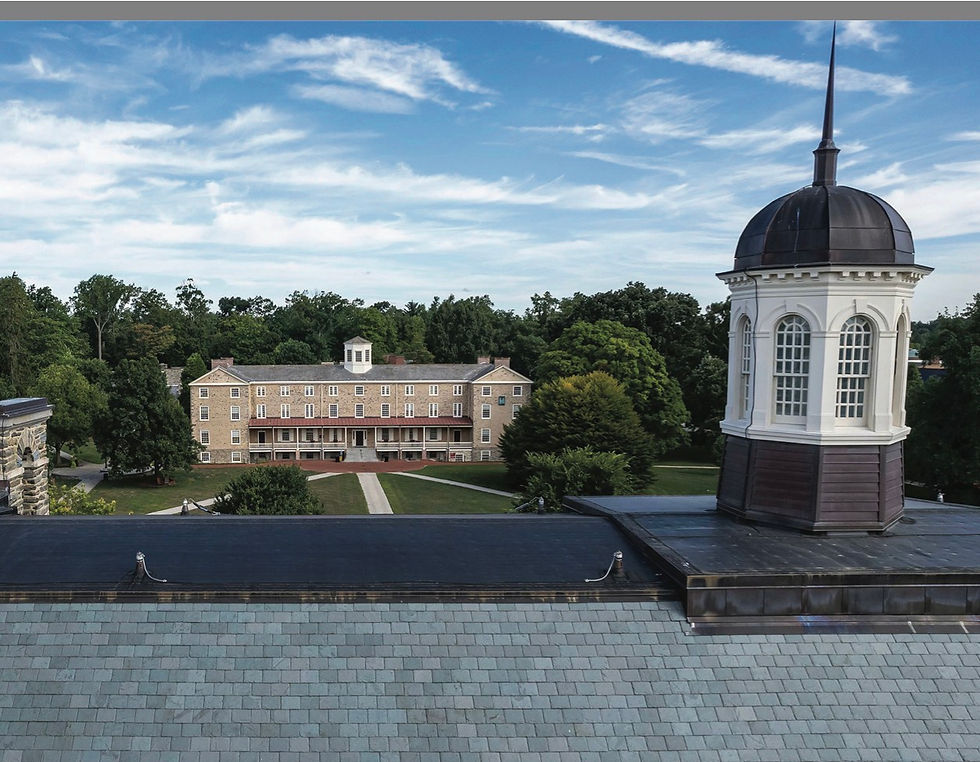
At the center of this artistic vision is conductor Nathan Zullinger, whose dual role as scholar and performer informs every aspect of the ensemble’s work. As Associate Professor and Chair of Music at Haverford College, Zullinger has cultivated a space where pedagogy and performance intersect with purpose. His background—spanning studies at Boston University and leadership roles across academic and professional settings—reveals a musician deeply invested in both craft and context. Whether curating repertoire, championing overlooked works like Charles Fussell’s Infinite Fraternity, or shaping the ensemble’s nuanced sound, Zullinger approaches each project with clarity, intention, and a palpable sense of advocacy.
The album opens with two ceremonial works by Thomas Lloyd, and immediately the listener is drawn into a world where text and tone move in close dialogue. Life Time, with its buoyant interplay between chorus and flute, unfolds with a sense of gentle optimism—voices rising and falling in conversation, supported by the airy grace of Susanna Loewy’s flute. There is a warmth here, an ease that invites immersion. In contrast, What Are Years strips away the instrumental color, revealing the ensemble in pure a cappella form. The writing becomes more searching, the exchanges between voice parts more pointed, as the choir navigates shifting emotional terrain with precision and poise.
That sense of dialogue deepens in Steven Gerber’s Ceremony After a Fire Raid, a work shaped by Dylan Thomas’s response to the devastation of war. Gerber structures the piece through a series of vocal pairings—soprano against soprano, tenor against tenor, and eventually the full ensemble in layered counterpoint. The effect is cumulative and deeply affecting. Individual lines emerge, recede, and intertwine, creating a tapestry of grief, resilience, and fragile beauty. The transitions between sections feel almost theatrical, as if each new configuration of voices reveals another facet of the text’s emotional core.
With Dale Trumbore’s Footnotes to a History of Music, the album takes a striking turn toward the imaginative. Setting a text by Kristina Marie Darling, the piece unfolds as a sequence of fragmented annotations—each one hinting at a larger, elusive narrative. Trumbore responds with a vocal landscape that is at once fluid and precise. Wordless textures ebb and flow beneath spoken and sung lines, creating what might be called a “voicestra”—a shifting sonic environment where harmony, rhythm, and timbre operate as narrative agents. The result is hypnotic, drawing the listener into a space where meaning is suggested rather than declared.
Ingrid Arauco’s Peace, one of the album’s most recent works, builds from a place of quiet reflection toward something more urgent and declarative. Setting the poetry of Gerard Manley Hopkins, Arauco crafts a work of layered intensity—solo lines emerging from the ensemble, then dissolving back into it. The interplay between voices is carefully balanced, with moments of stillness giving way to surges of collective energy. When the word “Peace” finally arrives in full voice, it feels less like a resolution than a hard-won affirmation—fragile, luminous, and deeply human.
Charles Fussell’s Infinite Fraternity stands as the album’s expansive centerpiece, a work that bridges literature, history, and musical expression. Drawing on texts by Nathaniel Hawthorne and Herman Melville, Fussell creates a multi-dimensional portrait of intellectual and emotional kinship. The addition of flute and viola introduces a new layer of color, with Susanna Loewy and Hannah Nicholas shaping the instrumental lines with sensitivity and purpose. At times, the flute lifts the texture into something almost playful; at others, the viola grounds it in darker hues. The baritone solo emerges as a narrative anchor, guiding the listener through shifting moods and perspectives. It is a work of breadth and contrast, held together by a keen sense of structural balance.
The album concludes with David Pegg’s arrangement of the traditional hymn Wondrous Love, a piece that returns us to a place of simplicity and reflection. The gentle introduction—flute tracing a lyrical path before the voices enter—sets the tone for a performance that feels both intimate and expansive. The choir moves with unforced grace, allowing the melody to unfold naturally, each phrase shaped with care. It is a fitting close to a program that has traversed such varied emotional and musical landscapes.
Throughout Enduring Harmonies, what resonates most is not just the quality of the performances—though they are consistently superb—but the clarity of purpose behind them. Each work is given space to speak in its own voice, shaped by composers, performers, and texts that bring distinct perspectives to the whole. Zullinger and Viva Voce understand that this music lives not only in its notation, but in its realization—in the breath, the blend, and the shared act of listening.
In a time of great uncertainty, Enduring Harmonies offers something steady and essential: a reminder that the human voice, in all its complexity and vulnerability, remains one of our most powerful means of connection. Through these performances, the past and present converge, and the repertoire itself is renewed—carried forward, quite literally, by living voices.
Comments