

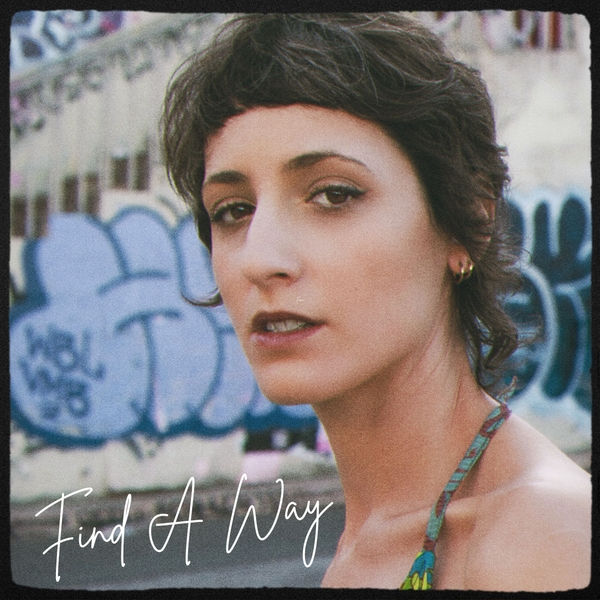
FAWN IN THE GARDEN, "Find a Way"
What if the thing standing between you and the life you want is you? Sometimes the most transformative songs begin in that uncomfortable space between knowing you need to move forward and understanding exactly what’s keeping you still. That’s the driving tension at the heart of and fueling “Find A Way,” the hypnotic new single from Fawn in the Garden, the empower-pop project of Los Angeles-based singer, songwriter, actor and multidisciplinary artist Sarah Rosenkrantz.
Rosenkrantz has spent much of her life following creativity wherever it leads. Raised on the Connecticut shoreline, she began singing, dancing, playing piano and guitar and performing in local theater as a child, eventually studying music, dance and acting in both Connecticut and California. Her artistic journey has taken her well beyond the traditional singer/songwriter path, including extended periods living and creating in Brazil, India and Berlin. Today, she channels those experiences into several distinct musical identities, with Fawn in the Garden exploring joy, self-expression, confidence and personal empowerment through a vibrant fusion of synth-pop, new wave and dance music.
“Find A Way” immediately reveals just how inventive that newfound confidence and creative freedom sound. A burst of trippy radio static opens the track, followed by a strangely filtered, high-register vocal repeating a phrase like a fragment of a thought. Before there’s even a discernible groove, Rosenkrantz has created a fascinating sonic limbo—a place between paralysis and possibility, memory and momentum, doubt and determination.
Then the music suddenly blooms. A bright, jangling guitar figure emerges beneath her lower, crystal-clear register, surrounded by exotic chimes and swirling atmospheric textures. When the drums finally lock into their deliberate pulse, Rosenkrantz begins phrasing the verses with almost meditative patience, her voice shifting upward into an airy, celestial timbre that makes the words feel less like conventional pop lyrics than thoughts floating through consciousness. It’s an intriguing introduction to an artist whose Fawn in the Garden persona embraces vulnerability yet refuses to turn it into a simple feel-good prescription.
The central refrain—“Only holding myself back”—becomes both confession and mantra. Repeated hypnotically, it digs into the song’s core question: what exactly are we hiding from, and who might we become if we stopped doing it? The production cleverly reinforces that internal dialogue, with filtered vocals, shimmering synths and restless guitar textures constantly circling the listener as though Rosenkrantz is literally trying to break through the walls of her own head.

Just when the song’s general flow feels established, the words “Look Look” become a pivot point. The music retreats into a darker, moodier space as she sings about staring into a mirror and finding “no reflection,” before the shuffle of “gotta keep on moving” reignites the spark. The emotional architecture is remarkably fluid: every rhythmic change seems to represent another psychological turn.
The chorus then surges back with greater force, Rosenkrantz layering a sustained midrange vocal beneath that ethereal upper register while spirited guitar strums and spacey synths whirl around the recurring hook. There are junctures when her delivery suggests the accessible grandeur of Katy Perry, while the tougher, more propulsive bridge carries a touch of Chrissie Hynde—particularly in the repeated declarations of “Can’t erase” and “I’ll embrace.” Yet Rosenkrantz remains unmistakably herself.
That bridge is the song’s moment of deeper revelation. “I’ll embrace / The good and bad days” transforms the earlier self-questioning into something more profound than simple motivational pop. Finding the way, she suggests, isn’t about erasing the past but confronting it, absorbing it and moving through it.
By the final repetitions, “Find A Way” has expanded from intimate self-talk into something almost cosmic. Voices spiral upward, the production seems to explode outward into space, and then everything gradually dissolves into a gentle electric-piano fade. It’s a gorgeous sonic metaphor: sometimes the next chapter isn’t waiting somewhere outside us. We discover it by finally meeting ourselves where we are.
Comments