


MARLEY'S GHOST, Honky Tonk
The finest honky-tonk songs have always understood one of country music’s enduring paradoxes: heartbreak often sounds best with a danceable backbeat. Tears mingle with twanging steel guitar, loneliness rides buoyant shuffle rhythms, and life’s hardest lessons somehow become invitations to fill the dance floor. Marley’s Ghost embraces that timeless tradition with remarkable authenticity on Honky Tonk, a joyful, lovingly crafted collection of country classics that celebrates the genre’s emotional richness while reaffirming why this veteran ensemble remains one of Americana’s most enduring musical treasures.
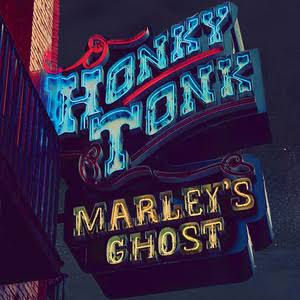
Produced with warmth, restraint and impeccable musical instincts by the legendary Larry Campbell—whose work with Bob Dylan, Levon Helm, Emmylou Harris and countless roots music icons has made him one of Americana’s most respected producers—Honky Tonk never feels like an exercise in nostalgia. Instead, Campbell allows the veteran ensemble to sound exactly like themselves - six master musicians approaching this material with deep affection, effortless chemistry and the confidence that comes from four decades of playing together. More than simply revisiting beloved classics by Hank Williams, Merle Haggard, Waylon Jennings, George Jones, Mel Tillis, Porter Wagoner & Dolly Parton and others, the dynamic 14 song collection captures the enduring spirit that made those songs timeless in the first place.
That chemistry is the album’s defining strength, stemming from the remarkable versatility of Dan Wheetman, Jonathan Wilcox, Mike Phelan, Jerry Fletcher, Ed Littlefield Jr and Bob Nichols, each an accomplished multi-instrumentalist and vocalist whose individual talents consistently serve the ensemble rather than compete for the spotlight.
In lieu of a singular lead voice, Marley’s Ghost shares vocal duties seamlessly while weaving together fiddle, pedal steel, piano, electric guitar, dobro and mandolin into arrangements that feel both spontaneous and meticulously crafted. Every performance breathes with the easy camaraderie of musicians who have spent years listening as carefully as they play.
The opening “Invitation to the Blues” immediately establishes the album’s emotional blueprint. Its lively fiddle-driven groove and spirited instrumental exchanges create an infectious energy that cleverly contrasts the song’s tale of loneliness and lost love. That balancing act continues throughout much of the collection, where melancholy stories are consistently wrapped inside irresistible up-tempo country rhythms. “Honky Tonk Song” transforms sleepless heartbreak into an irresistibly swinging shuffle, while “Brand New Mister Me” offers one of the album’s finest narratives, pairing a graceful country waltz with a remarkably honest portrait of a man acknowledging his own failures after losing the woman he loves.
Several songs explore familiar themes of regret and romantic disappointment, yet none feel repetitive because Marley’s Ghost continually varies the album’s expressive palette. “Burn Another Honky Tonk Down” tempers its tale of betrayal with an easygoing sway, while the beautiful duet on “Just Someone I Used to Know” (featuring a stellar Teresa Williams) layers rich harmonies over elegant fiddle and steel guitar, allowing both former lovers to seem equally haunted by memories of what once was. Even the buoyant “Detour” turns life’s wrong turns into an upbeat, danceable romp, proving once again that classic country has always known how to smile through its tears.
The album also shines whenever it shifts toward celebration. Waylon Jennings’ “Only Daddy That’ll Walk the Line” bursts with swagger, humor and outlaw attitude, while “Slowly” provides one of the collection’s most heartfelt moments. Its graceful waltz tempo, soaring fiddle and shimmering pedal steel transform a simple declaration of enduring love into an effortlessly timeless slow dance.
Likewise, “Waltz of the Angels” wraps romance and spirituality into one of the album’s most tender performances, its gentle melody floating gracefully on beautifully understated accompaniment. The closing “Birmingham Bounce” provides the perfect finale, its rollicking Western Swing energy reminding listeners that honky-tonk has always been music made as much for dancing as for reflection.
Comments